



Our Services
Dental Implant Services
At Pride Smile Dental Clinic, we provide dental implants to permanently replace lost teeth using high-quality titanium materials that can adhere firmly to the jawbone. Acting like natural dental roots, dental implants help you get back healthy, beautiful, and functional teeth as close to real teeth as possible.
Dental implants are a very popular treatment because they are highly durable. It does not fall out and does not require rewinding the adjacent teeth like a dental bridge. It also prevents the dissolution of the jawbone. This makes the face shape unchanged and can confidently chew solid foods.
The treatment process begins with an oral examination and an X-ray or CT scan to assess bone density and the appropriate location for dental implants. Our specialist dentists will then perform dental implants with high-precision techniques. Reduce tissue injury and make wounds heal faster. Once the dental implant is well attached to the bone, a crown will be inserted that is designed to be as beautiful and harmonious as possible with natural teeth.
Promotions Dental Implants
BIOTEM
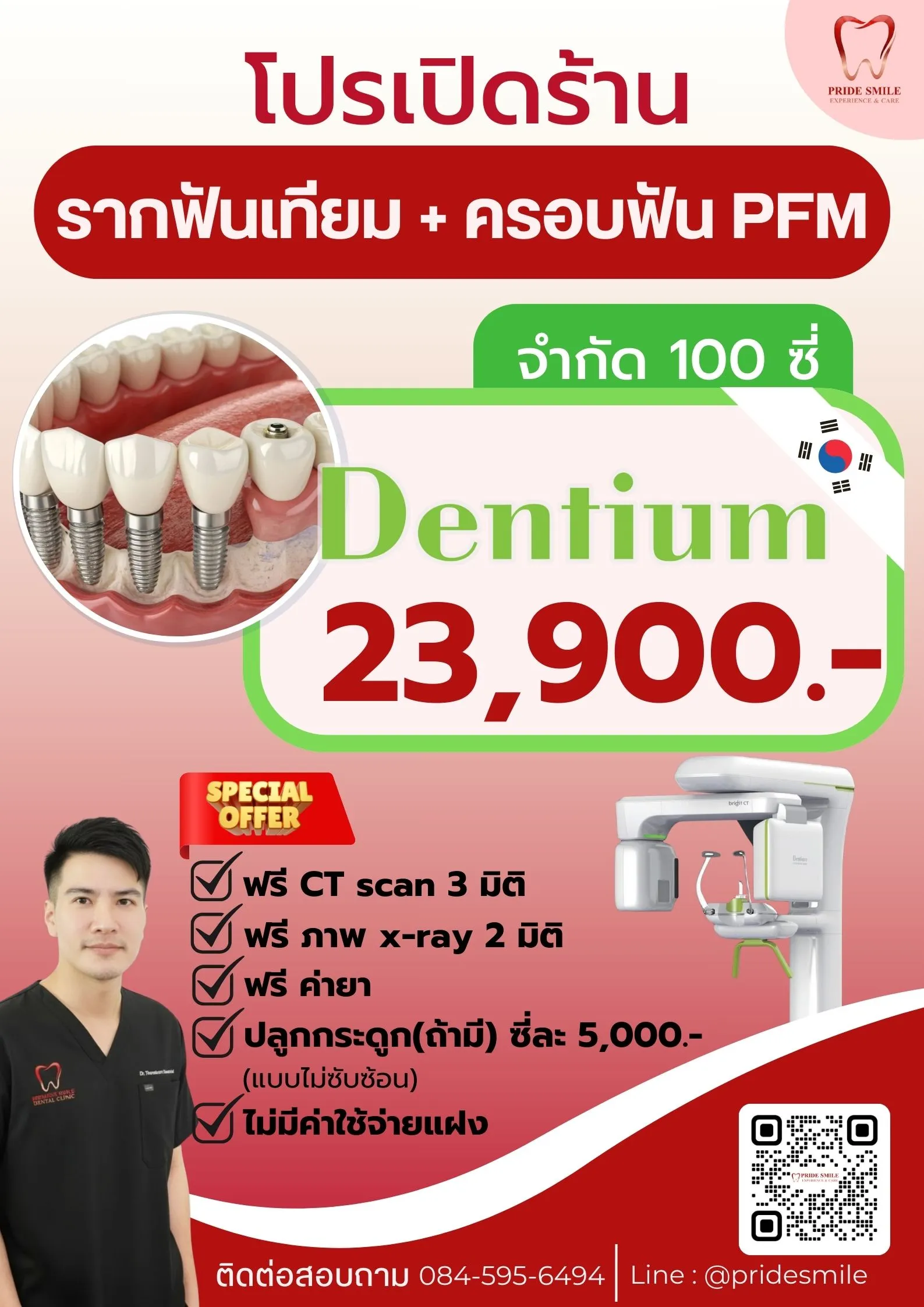
Dental Implants + PFM Crowns
Limited to 100 teeth.
19,900 THB
Dentium
Dental Implants + PFM Crowns
Limited to 100 teeth.
23,900 THB

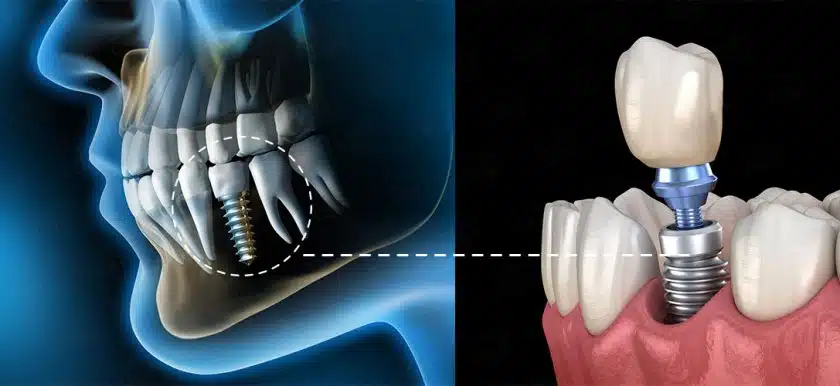
Dental Implant
Main components
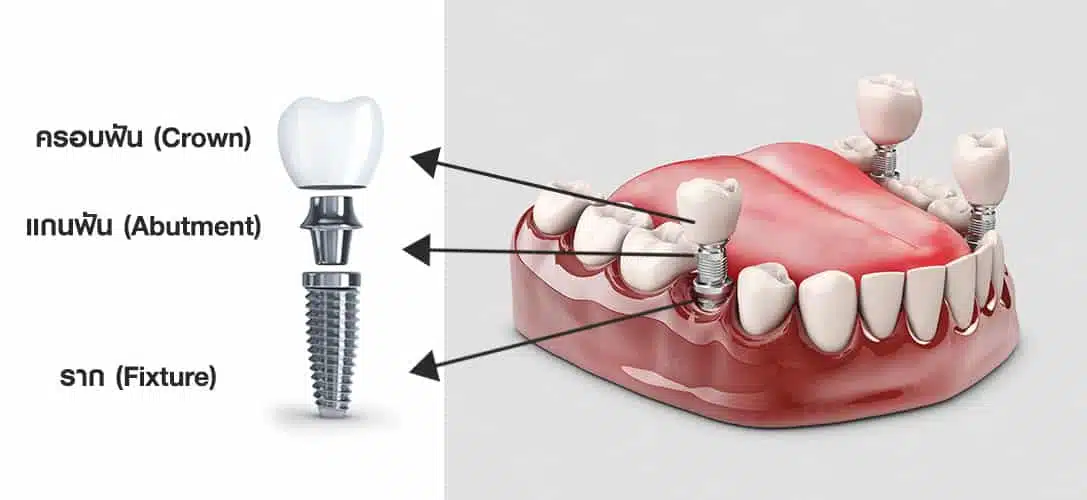
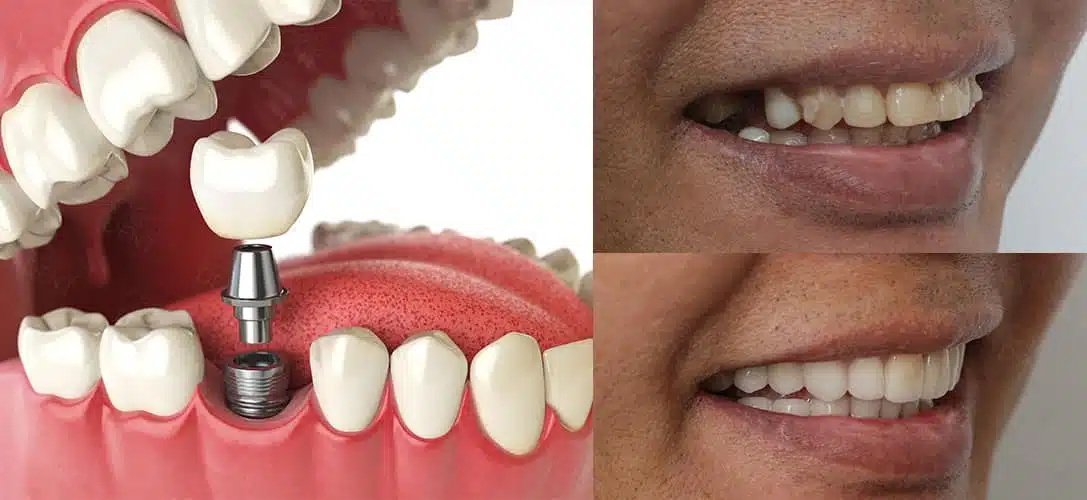
What are dental implants made of? We divide the components of dental implants into 3 parts:
- Implant (Fixture): A titanium screw embedded in the jawbone.
- Abutment: Connects the implant to the crown.
- Crown: The upper part is made of ceramic, shaped and colored like a real tooth.
Why do dental implants?
- Best replacement for lost teeth
- It helps prevent jaw bone resorption and adjacent teeth falling out.
- Provides occlusion and speech stability as close to real teeth as possible.
- Does not damage neighboring natural teeth.
Who is dental implants suitable for?
- People who have lost their teeth due to tooth decay, gum disease, or accidents.
- Those who want stable and long-lasting dentures.
Preparing for dental implants
1. Consult a dentist: The doctor considers the suitability of the patient for dental implants. Dental X-rays or CT scans, 3D scans, bone examinations, oral prints, and patient history checks may be performed to plan the treatment process to be suitable and safe for the patient.
2. Schedule an appointment for surgery: Patients should plan to prepare their teeth and take good care of their oral cavity after surgery.
- Prepare soft foods and painkillers.
- Take a break from work 1–2 First day
- 1 week of post-operative exercise break
3. Prepare your body before surgery: Get enough rest

Dental Implant Procedure
Steps to treat dental implants in a visit to the dentist to conclude the treatment process.
1. Meet your dentist to see if you are appropriate
There are dental X-rays, panoramic films, CT scans, bone examination, and preparation of a suitable treatment plan for the patient. The dentist will guide the patient on how to prepare for each step of the treatment in detail, such as:
- The amount of bone is sufficient, or bone graft is required. Before implanting a dental implant
- The patient may has taken medications that affect the dental implant surgery. The dentist will have to adjust the treatment plan.
- The bone may need to prepare for dental implantation. Your dentist will consider a bone graft or adjust the treatment plan.
2. Prepare the location of the dental implant
The dentist may perform a bone grafting. If the bone thickness is insufficient, or there are impacted teeth or damaged teeth that need to be removed, the jawbone will be restored and ready for proper implantation.
3. Schedule an appointment for surgery
Patients should plan and take good care of your oral cavity after surgery.
- Prepare soft foods and painkillers.
- Take a break from work 1–2 first day
- 1 week of post-operative exercise break
4. Prepare your body before surgery
Get enough rest.
5. Dental implants
Dental implant surgery is minor surgery. Under local anesthesia with tightly closed sutures, there was no open wound after surgery.
6. Fix the crown on dental implant
If the placed dental implant is perfectly embedded with the surrounding bones. The dentist will install the core structure (Abutment) and put the crown on the implant and attach it to the abutment.
7. Dentist will make an appointment to follow up
Make an appointment for postoperative follow-up within 1-2 months and make an appointment for an annual check-up to check oral health as usual.
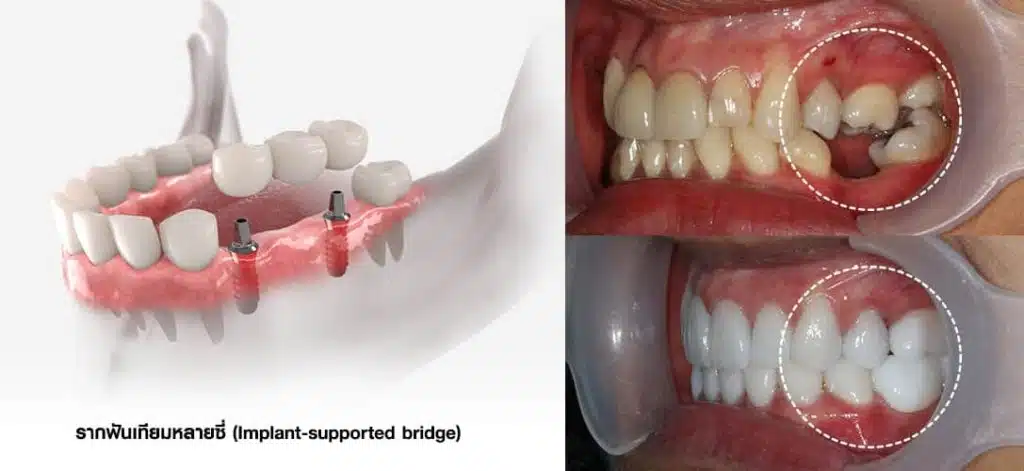
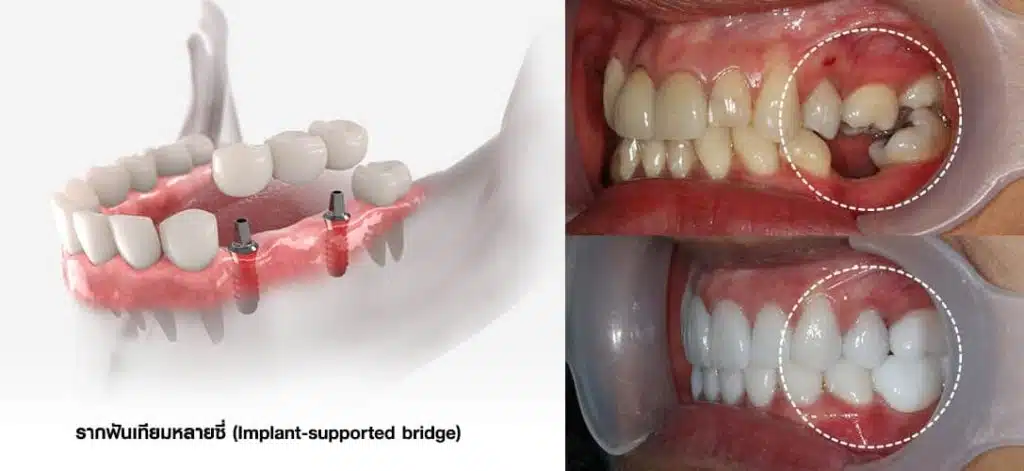
Multi-tooth implants
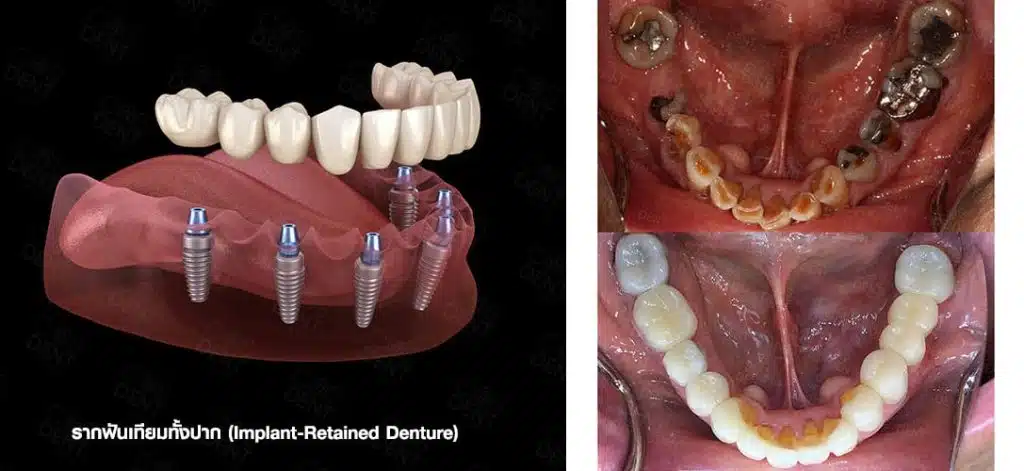
Whole Mouth Implant
Comparison of Dental implant , Dental bridge and Removable denture
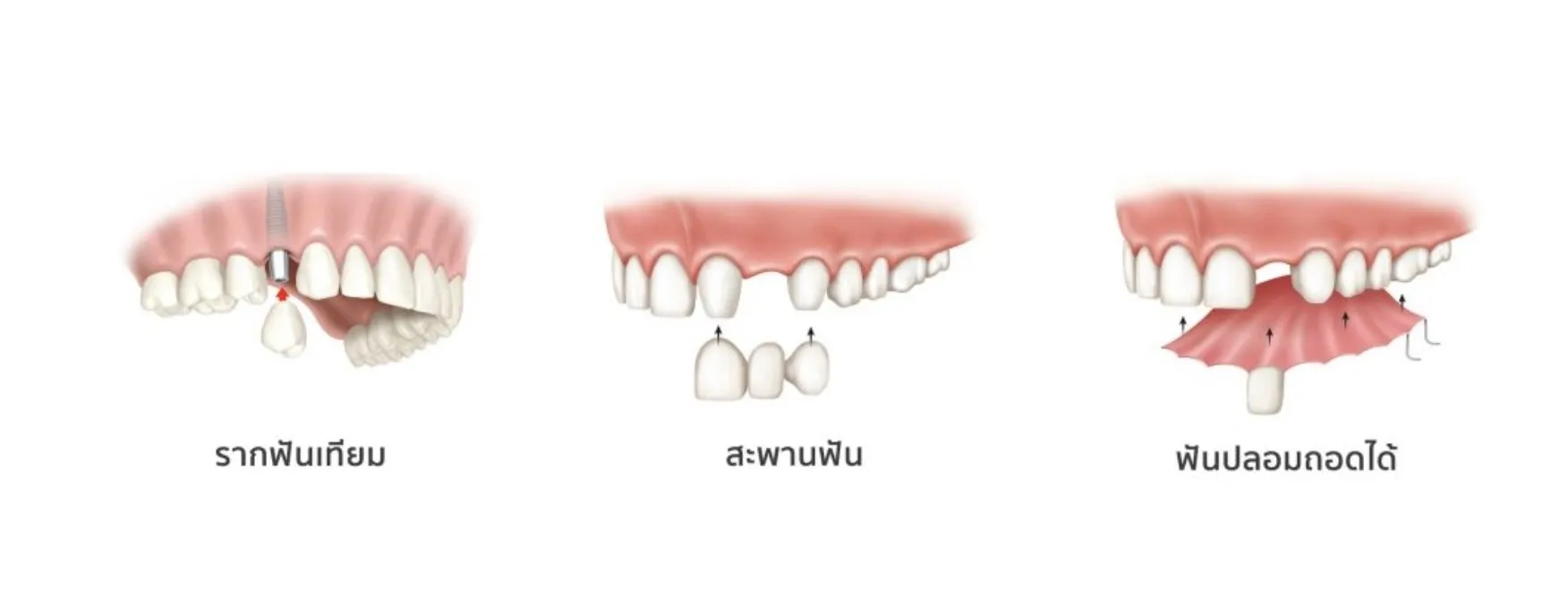
Dental Implants vs Dental Bridges
- We do not have to rewind the neighboring teeth, which will damage the dentin.
- Rewinding the neighboring teeth If we don’t clean it well for a long time, it will cause decay at the joints of the filling, which will lead to the removal of the tooth in the future.
- Cleaning is relatively easier than dental bridges because dental floss can be used to pass in and out.
The disadvantage is the time it takes to do it. Most dental bridges are completed faster. There is a less complicated procedure (no implant surgery). As for the price. Nowadays, the cost is not much different as in the past. Therefore, dental bridge surgery today tends to decrease significantly.
Dental Implants vs Removable Dentures
- Dental implants are dentures that are firmly attached. No need to take it in and out.
- It is more beautiful because it can be made into a crown that has beauty and beauty like natural teeth. In the part where the dentures are removable, they are acrylic.
- It is effective in fixation because dental implants are fixed in the bone.
The common problem is that the cost of implants is higher than removable dentures.
What are dental implants made of?
What are dental implants made of? We divide the components of dental implants into 3 parts:
- Fixture is made of titanium material that is compatible with the tissue to provide strength and effective resistance to occlusion.
- Abutment is located in the middle between the root and the crown, which is like the main core structure. It acts as a fixture for the titanium root and the crown to stabilize it.
- Crown is made of ceramic and is shaped and colored like natural teeth.
Advantages of Dental Implants
When a tooth is lost, the main problem that follows is bone resorption in the jaw, which can affect the stability of adjacent teeth. The benefits of dental implants include:
- Preventing bone loss caused by missing teeth
- Enhancing strength and improving overall oral health
- Allowing efficient chewing similar to natural teeth
- Improving appearance and creating a confident smile
- Helping improve speech clarity
- Solving issues caused by removable dentures, such as looseness, discomfort, or food getting trapped underneath while eating or talking
Risks of Dental Implant Surgery
Surgical procedures in general may carry certain risks, particularly related to the care of open wounds. Dental implant surgery is no exception; however, such complications are uncommon and can usually be treated effectively.
- Infection around the dental implant site.
- Pain, swelling, and tenderness due to the surgery affecting surrounding structures such as nearby teeth or blood vessels.
- Sinus complications may occur if a dental implant placed in the upper jaw extends into the sinus cavity.
However, there is no need to worry. The dentist will thoroughly clean the surgical area before the procedure and prescribe antibiotics to help control and prevent infection. After the surgery, follow-up appointments will be scheduled to monitor healing and ensure that no infection develops later on.
In special cases where patients have underlying health conditions, such as sinus issues, a comprehensive evaluation will be performed. If necessary, a Sinus Augmentation (Sinus Lift) procedure will be carried out to increase the sinus floor and provide adequate support for the dental implant.
Lifespan of Dental Implants
Post-Operative Care After Dental Implant Surgery
During the recovery period after surgery, mild swelling may occur for 3–7 days. Patients are advised to strictly follow the dentist’s instructions to help the implant site heal properly and quickly.
- Apply a cold compress to the treated area immediately after surgery to reduce swelling.
- Avoid rinsing your mouth vigorously for 24 hours after surgery, as this may dislodge the blood clot, cause bleeding, increase pain, and raise the risk of infection.
- On the first day, avoid using a straw, as the suction may affect the surgical wound.
- Rinse gently with salt water 3–4 times per day.
- Avoid spicy, very hot, or hard foods for 2 days.
- Avoid strenuous exercise for 3 days after surgery.
- Take medications prescribed by your dentist as directed to relieve symptoms.
Healing time varies from person to person depending on overall health. Patients should attend follow-up appointments as scheduled to ensure proper healing after treatment. Dental implant surgery is a standard procedure that helps prevent bone loss at the extraction site. Most patients experience discomfort similar to or less than that of a tooth extraction.
In general, for first-time implant patients, mild swelling and discomfort may occur for about 5–7 days after surgery and will gradually subside as the wound heals. Once healed, most patients do not feel any difference compared to natural teeth.
For patients who previously wore removable dentures and switch to dental implants, they often notice improved comfort since they no longer need to remove their dentures. Eating becomes easier, and concerns about dentures shifting or coming loose while speaking or eating are eliminated.
Who Can Get Dental Implants?
Not every patient who has lost a tooth is suitable for dental implant surgery. There are certain physical and medical factors that dentists carefully consider, including:
- Sufficient Bone Volume Adequate bone is required to support a dental implant. If a patient has been missing a tooth for some time, bone loss may have occurred, resulting in insufficient bone for implant placement. The dentist will evaluate this using a CBCT scan, which provides 3D images of the oral cavity and jawbone to accurately assess bone volume. If the bone is found to be inadequate, a bone grafting procedure will be performed first. This allows the body to regenerate new bone and tissue, preparing the area for implant surgery at a later stage.
- Age 18 Years or Older Dental implants are most successful once the body has fully developed and the jawbone has completed its growth. Therefore, patients should generally be at least 18 years old.
- Good Overall Health Good general health and good oral health are essential for successful implant surgery. Patients with high-risk behaviors, such as heavy smoking, or with underlying medical conditions—such as hypertension, diabetes, cancer requiring radiation therapy to the facial area, leukemia, hyperthyroidism, severe periodontitis, or untreated tooth decay—should receive appropriate treatment beforehand. The dentist will evaluate oral health and create a treatment plan accordingly. In some cases, patients with medical conditions may need to consult their primary physician before proceeding.
- Pregnancy Pregnant women are advised to postpone dental implant treatment due to the potential risk of complications that could affect the baby. Dentists generally recommend waiting until after delivery before undergoing implant surgery.
How to Clean Dental Implants
Q & A Frequently Asked Questions
Does getting a dental implant hurt?
How long does a dental implant procedure take?
Are there any disadvantages of dental implants?
How many years can a dental implant last?
Is getting a dental implant worth it?
Although dental implants are relatively expensive, they are highly durable. In terms of function and maintenance, they are similar to natural teeth. Therefore, dental implants are considered one of the best options for replacing lost natural teeth.
Can I get braces if I have dental implants?
If a patient who already has a dental implant later wishes to undergo orthodontic treatment, and the implanted tooth needs to be moved, orthodontic treatment will not be possible for that tooth because dental implants cannot be repositioned Patients should consult their dentist to properly plan the treatment in order to avoid unnecessary time and expenses However, in some cases, orthodontic treatment may still be possible after implant placement. The treatment may become more complex, or clear aligners may be required as part of the orthodontic approach.